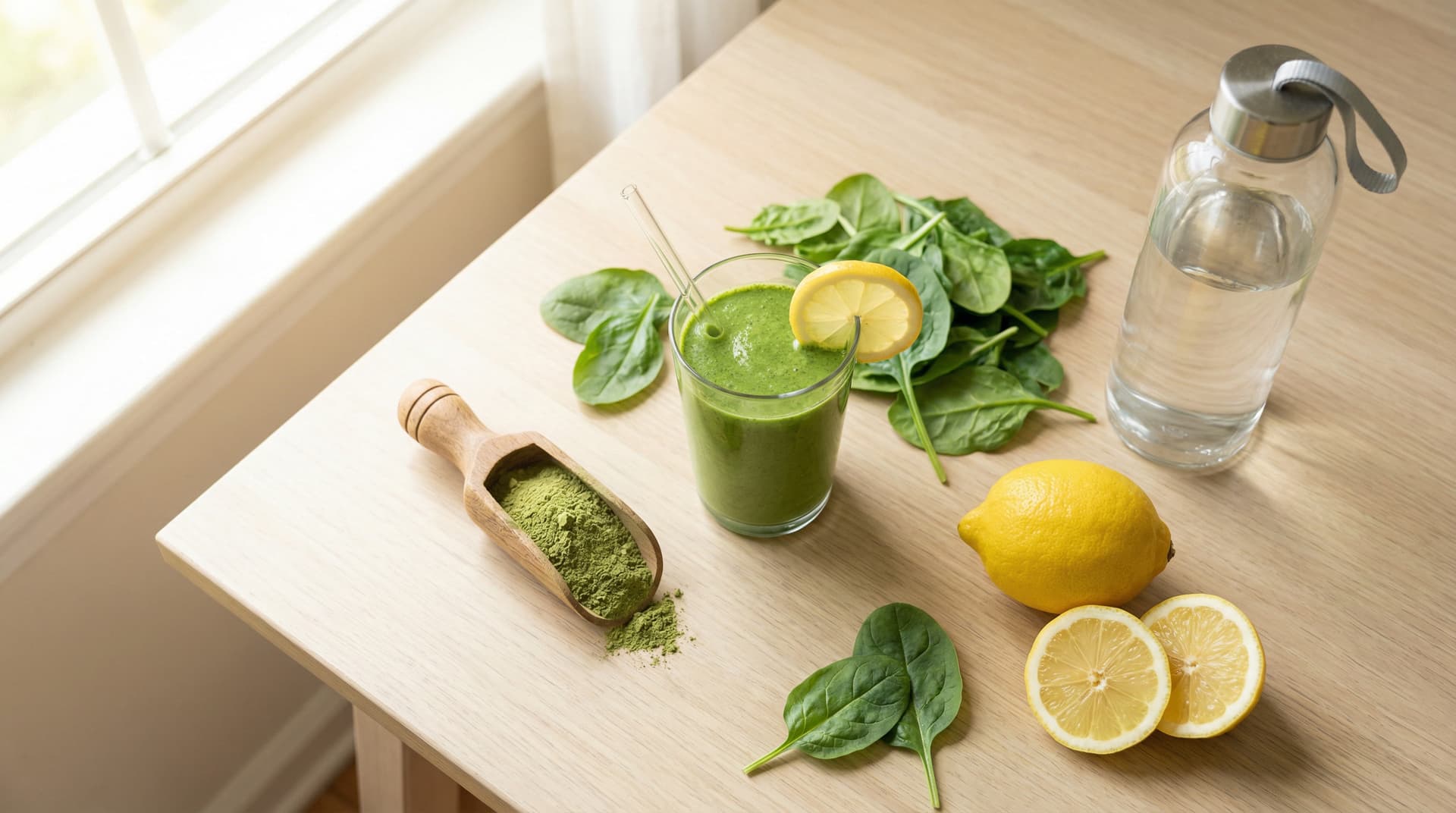
Best Greens Powders for Beginners (Honest, No-Hype Review)
A beginner-friendly guide to some of the best greens powders, what to look for, what to avoid, and honest top-rated Amazon picks you can use consistently.

Editorial Review
HNH Editorial Team
Nutrition professionals & registered dietitians
Our editorial team consists of nutrition professionals, registered dietitians, and health content specialists who review, fact-check, and verify all content for accuracy and evidence-based information. All articles undergo rigorous editorial review before publication.
If you’re trying to eat better, a greens powder can feel like the easiest “nutrition shortcut” ever. But most beginners have the same questions:
- Will this replace vegetables?
- Is it worth the money?
- Which one is easiest to stick with?
This is an honest, no-hype guide to the best greens powder for beginners—with simple rules to help you choose confidently, plus beginner-friendly picks you can find on Amazon.
Best for
Busy days + consistency
Not for
Replacing real meals
Beginner rule
Pick the one you’ll drink
Friendly reminder: This article is educational and not medical advice. Supplements can support a routine, but they don’t replace a balanced diet. If you’re pregnant/nursing, have a medical condition, or take medications, consult a qualified professional.
What is a greens powder (in plain English)?
A greens powder is usually a blend of dried and powdered ingredients like:
- leafy greens (spinach/kale)
- algae (spirulina/chlorella)
- herbs
- sometimes fiber, probiotics, enzymes, or “superfood” add-ons
Think of it as a convenient add-on—something you mix with water or add to smoothies when you want an easier nutrition routine.
Helpful context: the NIH Office of Dietary Supplements and the FDA both emphasize that supplements are meant to supplement the diet—not replace healthy eating patterns. [1][2]
What greens powders can (and can’t) do
What they can do
- Help you build a simple daily routine you can repeat
- Add “something green” on days you’re low on vegetables
- Support consistency when life is busy
What they can’t do
- Replace fruits and vegetables long-term
- “Detox” your body (your body already has systems for that)
- Guarantee energy, weight loss, or gut fixes (those come from overall habits)
Internal reads you might like:
- Energy: Best Supplements for Energy Without Caffeine
- Gut Health: Best Probiotics for Women’s Gut Health
- Weight Loss: Weight Loss Hacks That Actually Work
How to choose the best greens powder for beginners
1) Taste matters more than you think
If it tastes “too green,” you won’t use it. Beginners usually do best with:
- mild flavor options
- “mixes well” reviews
- a flavor you can tolerate daily
2) Start with a simpler formula
A lot of blends include 40+ ingredients. That’s not automatically “better.”
For beginners, simple and repeatable wins.
3) Look for transparency (not hype)
Good signs:
- clear ingredient list
- labeled serving size
- reasonable claims (supports routine, not “cures everything”)
FDA guidance is clear: supplements should not claim to diagnose, treat, cure, or prevent disease. [2][3]
4) Consider third-party testing if you want extra reassurance
This can be especially relevant for athletes or anyone who wants an extra quality step.
NSF’s “Certified for Sport” is one example used to reduce risk of contamination with banned substances. [4][5]
Best greens powders for beginners (honest picks)
These picks are chosen for beginner priorities:
- taste and mixability
- simple routine fit
- widely used brands
- easy to find and reorder

Best overall beginner pick
A popular entry-level greens powder that’s easy to build into a daily habit. May help support consistency on low-veggie days.
View on Amazon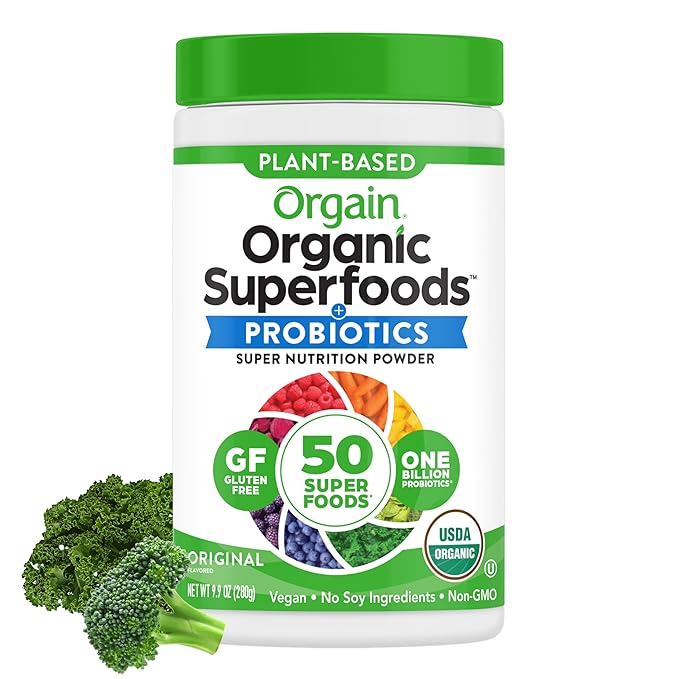
Best for smoothie people
Blends well into smoothies and shakes. Great if you prefer to mask the ‘green’ taste with fruit or protein.
View on Amazon
Best classic greens profile
A more greens-forward option for people who want a traditional superfood-style blend and don’t mind a stronger green taste.
View on Amazon
Best simple greens starter
A simple, single-ingredient style option that’s easy to start with if you want something straightforward and minimally complex.
View on AmazonTip: If you’re sensitive to strong flavors or lots of add-ons, choose a simpler, lightly flavored option first—then “upgrade” later if you want.
A beginner-friendly routine (so you actually use it)
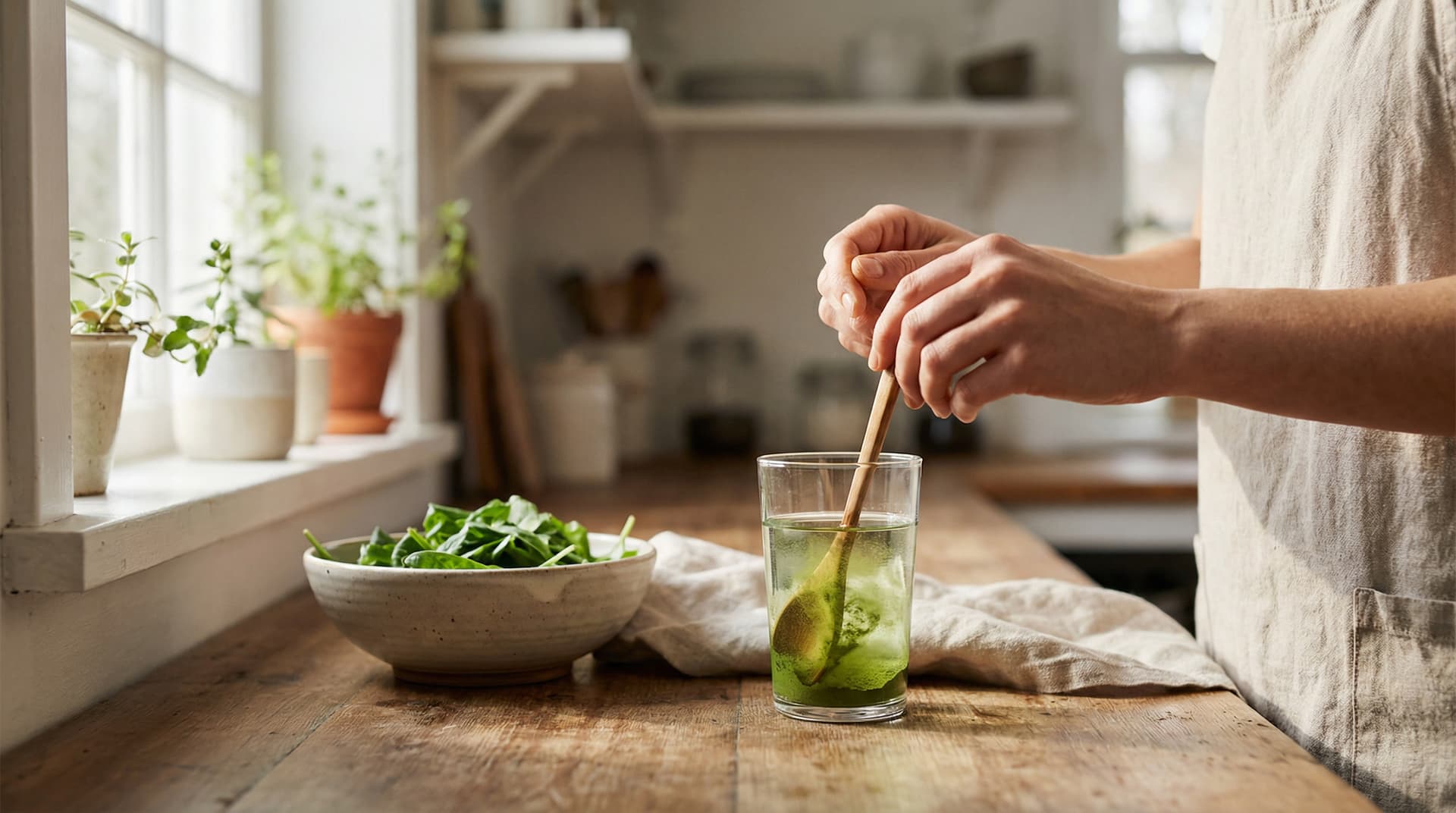
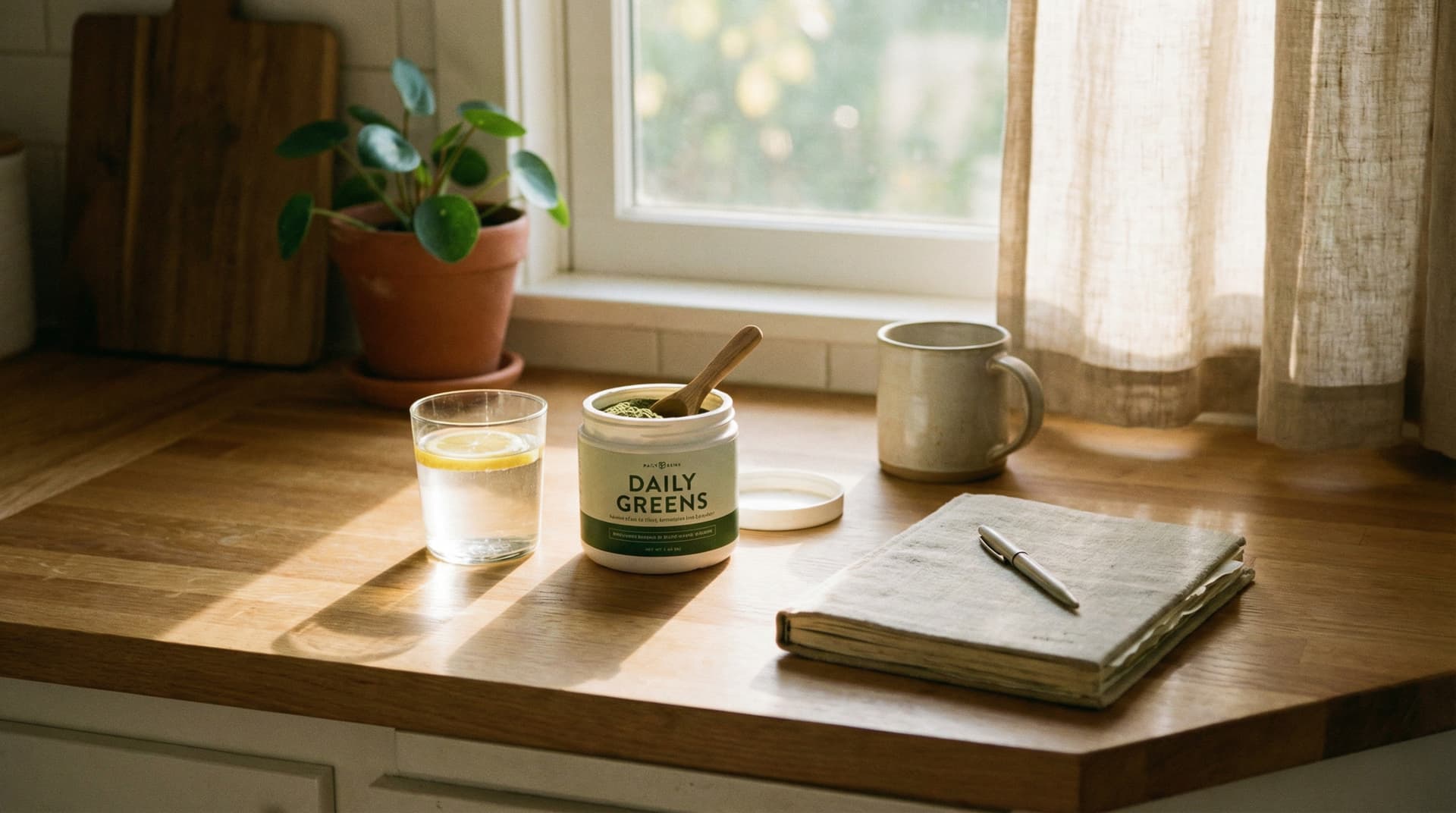
Option A: Water + greens (fastest)
- Mix with cold water
- Shake well
- Drink with breakfast
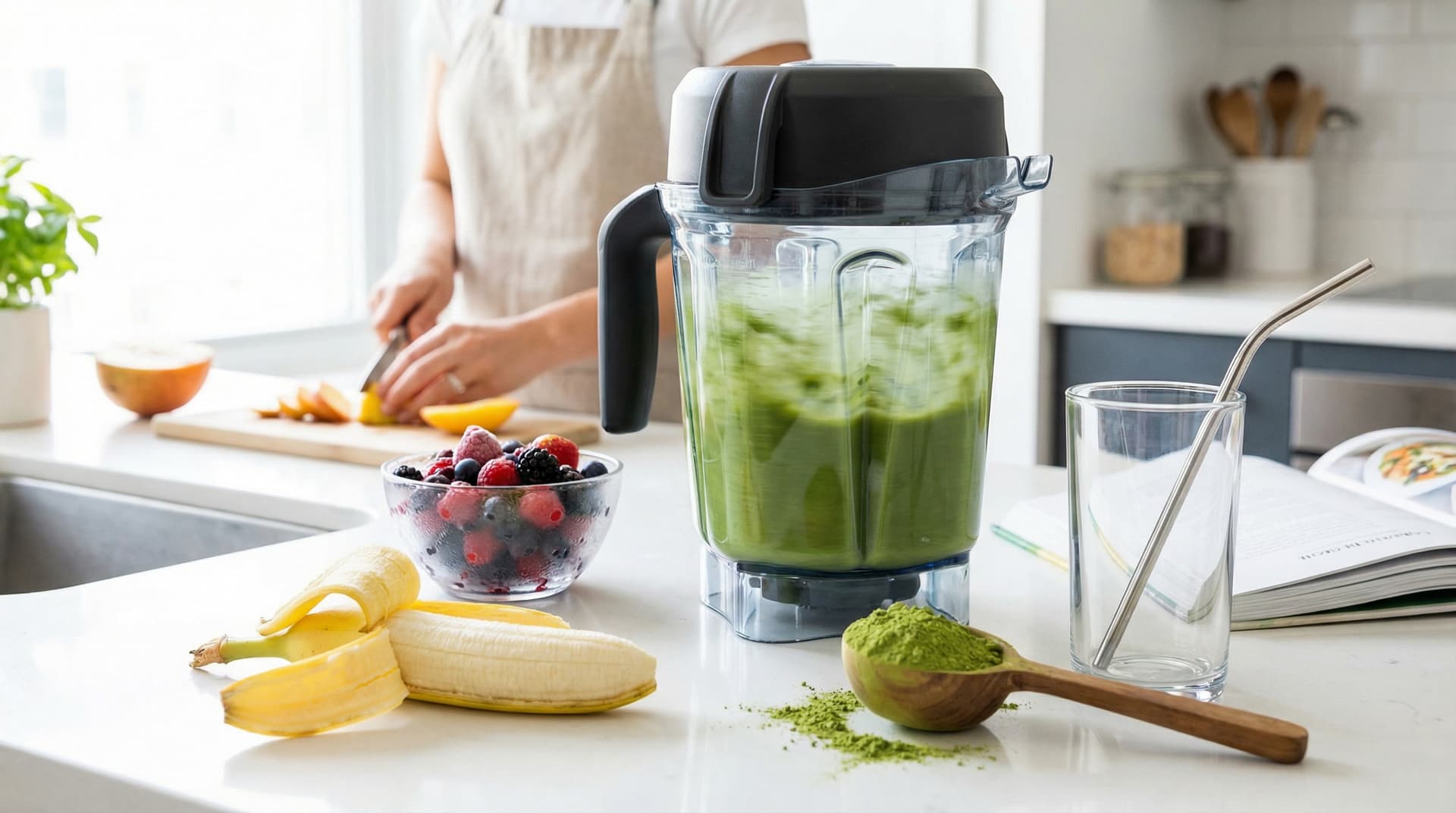
Option B: Smoothie add-on (best for taste)
- Add 1 serving to a fruit smoothie
- Pair with protein (Greek yogurt or protein powder) for a more filling breakfast
Option C: Midday reset
- Use it between lunch and dinner if afternoons are your “snack danger zone”
Beginner start plan
- • Start with half a serving for 3–5 days
- • Take it with food if your stomach is sensitive
- • Pick the easiest time of day to repeat
Keep it realistic
- • Greens powder = support, not a replacement
- • Build meals around protein + fiber
- • Consistency beats the “perfect” supplement
Common beginner mistakes (avoid these)
-
Buying the “strongest” formula first
Start simple. You can adjust later. -
Expecting instant results
Greens powders are about routine support, not dramatic outcomes. -
Taking too much too soon
More isn’t always better—especially if the blend includes extra herbs/fiber. -
Using it to “cancel out” chaotic eating
A better approach: keep meals repeatable (protein + fiber + produce).
When you might skip greens powder
A greens powder may not be worth it if:
- you already eat vegetables daily and feel good
- you hate the taste and won’t be consistent
- you’d rather spend that money on groceries (often a better return)
Simple next step
Pick one greens powder and try it for 7 days
The best greens powder for beginners is the one you’ll actually use. Keep it simple and track how you feel.

FAQ
Frequently Asked Questions
References
[1] NIH Office of Dietary Supplements
Dietary Supplements: What You Need to Know
[2] U.S. FDA
Questions and Answers on Dietary Supplements
[3] U.S. FDA
Structure/Function Claims and DSHEA Disclaimer
[4] NSF Certified for Sport
What the Certified for Sport Mark Means
[5] NSF
Certified for Sport Program Overview
Content Transparency
This article was created with the assistance of AI technology and has been thoroughly reviewed, fact-checked, and verified by our editorial team of nutrition professionals and registered dietitians. All information is based on current scientific research and medical guidelines. Our editorial process ensures accuracy, relevance, and adherence to evidence-based practices.
Editorial Review
HNH Editorial Team
Nutrition professionals & registered dietitians
Our editorial team consists of nutrition professionals, registered dietitians, and health content specialists who review, fact-check, and verify all content for accuracy and evidence-based information. All articles undergo rigorous editorial review before publication.
High-Protein Breakfasts That Don't Spike Blood Sugar (Beginner Guide)
Simple high-protein breakfast ideas that support steadier energy and fewer crashes—plus meal prep tips and beginner-friendly product picks.
Read article