Heart Health Nutrition: Simple Habits That Support a Healthy Heart
A calm, beginner-friendly guide to heart health nutrition: foods, daily habits, and supplements that may help support cardiovascular wellness.

Editorial Review
HNH Editorial Team
Nutrition professionals & registered dietitians
Our editorial team consists of nutrition professionals, registered dietitians, and health content specialists who review, fact-check, and verify all content for accuracy and evidence-based information. All articles undergo rigorous editorial review before publication.
Heart health doesn’t require a perfect diet or dramatic rules. For most people, it’s built through small daily choices that are easier to repeat than “all-or-nothing” plans.
That’s good news because heart-supportive nutrition overlaps with the basics that support energy, digestion, and sustainable weight goals: more fiber, smarter fats, consistent movement, and simple routines.
This guide breaks down heart health nutrition in beginner-friendly terms, then gives you a practical list of foods, habits, and optional supplements that may help support a healthy heart—without fear-based language or overwhelming science.
Big idea
Small habits add up over time
Best focus
Fiber + healthy fats + movement
Beginner win
Consistency beats extremes
Friendly reminder: This article is educational and not medical advice. If you have a condition, take medications, or have persistent symptoms, speak with a qualified professional before changing your diet or supplements.
What Does “Heart Health” Mean?
When people say “heart health,” they’re usually talking about cardiovascular health—how well your heart and blood vessels support everyday life.
In simple terms, heart health includes:
- Circulation: how efficiently blood moves through the body
- Blood pressure: the force of blood against blood vessel walls
- Cholesterol balance: often discussed as LDL and HDL
- Inflammation and vessel health: a broad topic, often influenced by lifestyle patterns
Here’s the beginner-friendly takeaway: heart health nutrition isn’t one magic food. It’s an overall eating pattern—plus lifestyle habits like movement and sleep—that’s commonly recommended by reputable organizations like the American Heart Association and the CDC. [1][2]
If you’re already working on stable energy or digestion, you’re not starting from scratch. Many heart-supportive habits also support:
- steadier afternoons and fewer crashes (energy)
- better digestion through fiber and hydration (gut health)
- realistic weight goals through repeatable meals (weight loss)
Related reading (helpful, not required):
- Best Supplements for Energy Without Caffeine
- Magnesium Glycinate Benefits
- Metabolism-Boosting Foods
- Beginner Weight Loss Hacks
- Morning Gut Routine
Best Foods for Heart Health
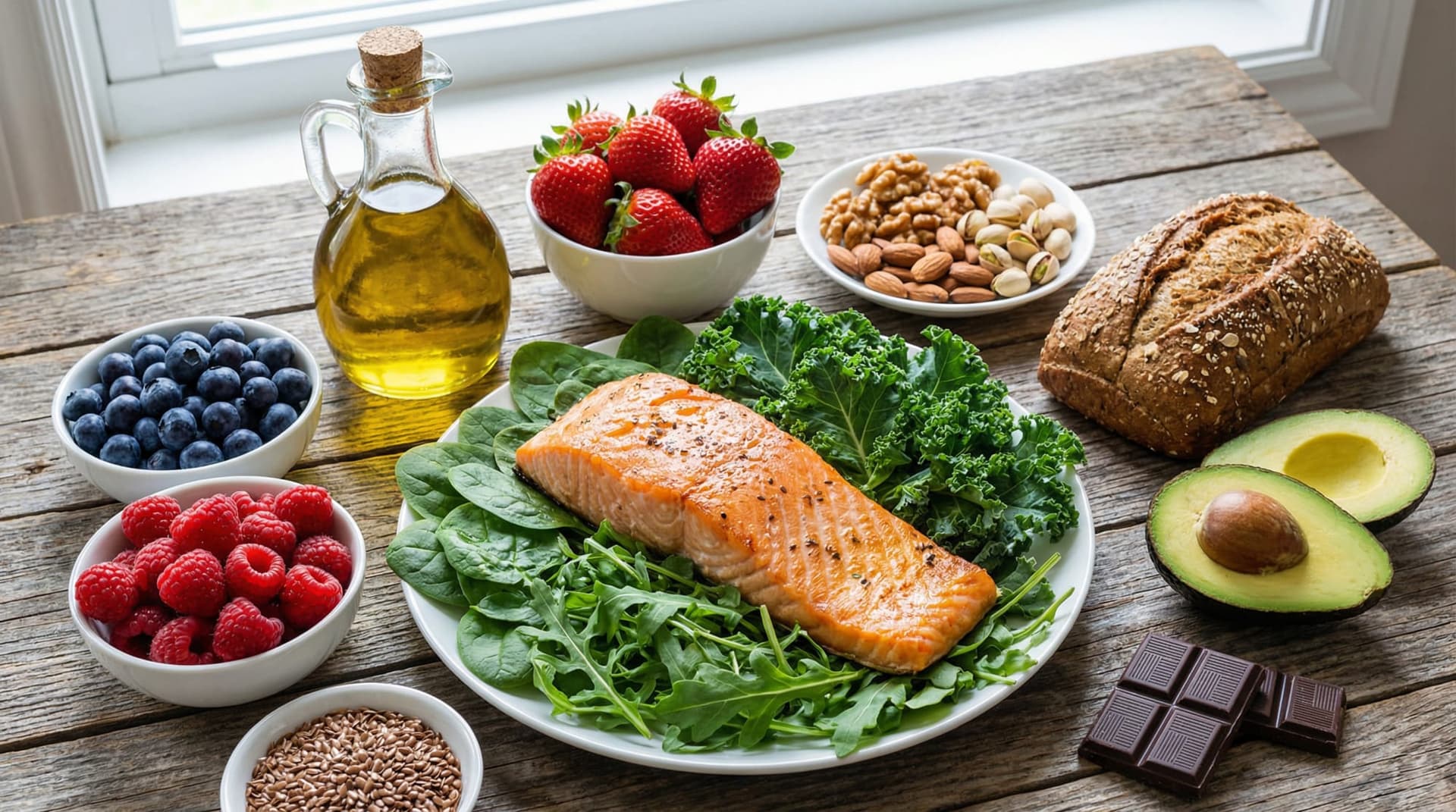
Most heart-supportive eating patterns share a few themes: more plants, more fiber, healthier fats, and fewer ultra-processed foods. [1]
Below are 10 foods that are commonly included in heart health nutrition—plus easy ways to make them part of your day.
1) Leafy greens (spinach, kale, arugula)
Why they’re popular: leafy greens are an easy “foundation” food in many heart-healthy patterns.
How to add them daily:
- add a handful of spinach to scrambled eggs
- toss greens into soup
- build a 3-minute salad with olive oil and lemon
2) Berries (blueberries, strawberries, raspberries)
Why they’re popular: berries make “healthy eating” feel easy because they’re simple, snackable, and pair well with protein.
How to add them daily:
- top Greek yogurt
- add to oatmeal
- keep a frozen bag for smoothies
3) Oats
Why they’re popular: oats are a fiber-forward breakfast base that’s easy to repeat.
How to add them daily:
- overnight oats (prep 2–3 servings at once)
- oatmeal with nuts and berries
- blend oats into a smoothie for thickness
4) Beans and lentils
Why they’re popular: they’re budget-friendly and can replace more processed carbs.
How to add them daily:
- add beans to tacos, salads, or bowls
- use lentils in soup
- mix beans into rice for a “complete meal” vibe
5) Nuts (walnuts, almonds, pistachios)
Why they’re popular: nuts help meals feel satisfying, which makes a heart-healthy plan easier to stick with.
How to add them daily:
- small handful as a snack
- sprinkle on oatmeal
- add to salad or yogurt
6) Seeds (chia, flax, hemp)
Why they’re popular: seeds are an easy way to boost fiber and “make breakfast better.”
How to add them daily:
- chia in yogurt
- flax in smoothies
- hemp on salads
7) Olive oil
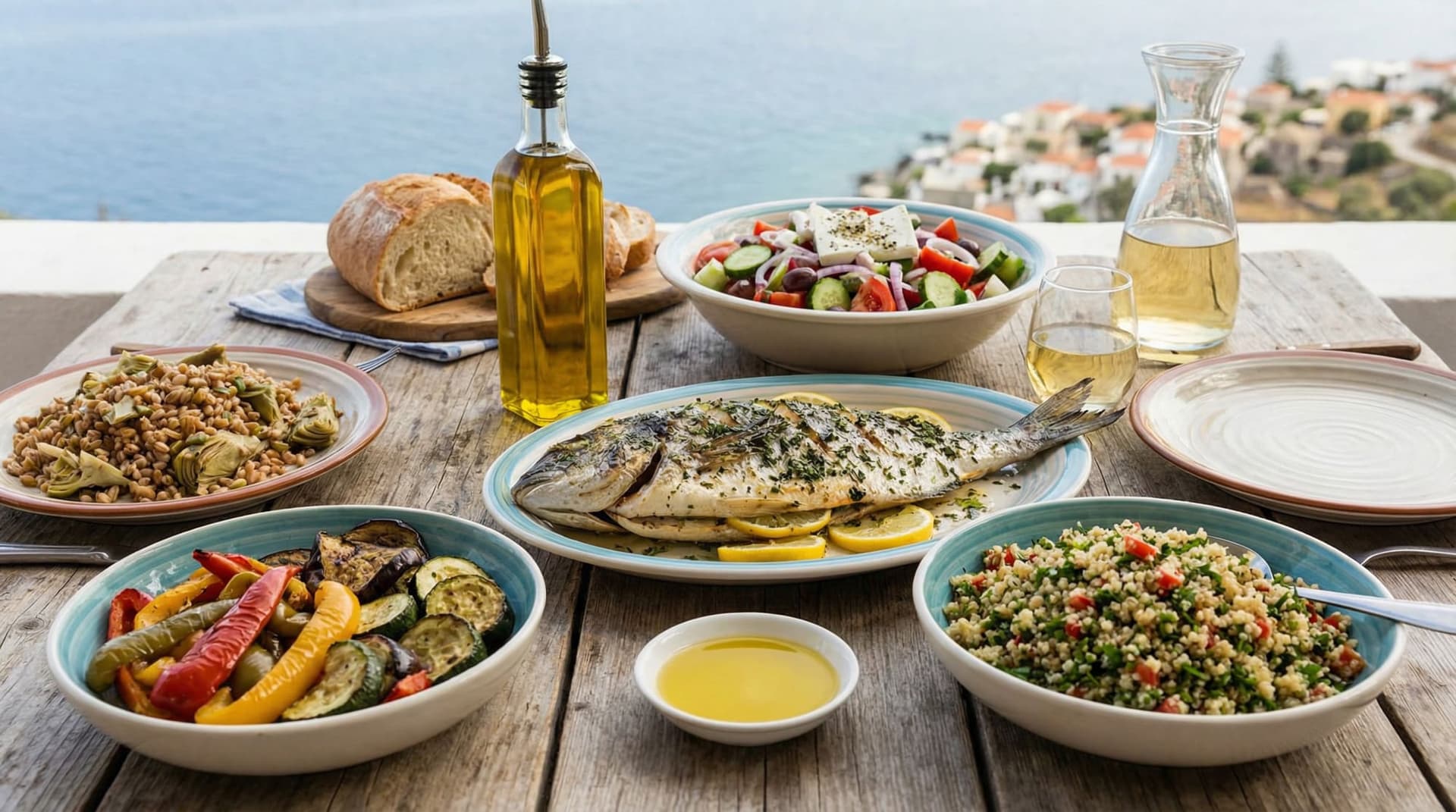
Why it’s popular: olive oil is often used in Mediterranean-style eating patterns recommended for heart health. [1]
How to add it daily:
- use as salad dressing
- drizzle on roasted vegetables
- swap for butter in some cooking
8) Fatty fish (salmon, sardines, trout)
Why it’s popular: fish is a food-based way to get omega-3 fats, commonly included in heart-healthy patterns. [3]
How to add it weekly:
- aim for fish a couple times per week if you enjoy it
- use canned salmon/sardines for convenience
9) Whole grains (brown rice, quinoa, whole wheat)
Why they’re popular: whole grains add fiber and structure to meals.
How to add them daily:
- cook one grain and use it for 2–3 days
- make a simple “bowl” meal: grain + protein + veggies + olive oil
10) Plain yogurt or kefir (if you tolerate dairy)
Why it’s popular: pairing protein with fiber often helps with steadier energy and fewer cravings.
How to add it daily:
- yogurt + berries + nuts
- savory yogurt as a dip
- kefir smoothie
Practical note: you don’t need all ten every day. A beginner-friendly approach is to pick two heart-friendly “anchors” (like oats + berries, or beans + olive oil) and repeat them often.
Heart-Healthy Daily Habits That Make a Difference
Food matters—but habits make food easier to maintain.
These heart-healthy habits are simple on purpose. They’re not “perfect lifestyle” goals. They’re realistic levers that help people stay consistent.
Walk more (even short walks count)
Movement is a core heart-health habit recommended by public health organizations. [2]
Beginner ways to make it happen:
- 10-minute walk after lunch
- walk during phone calls
- park farther away
- 5-minute “movement snacks” throughout the day
If you’re low-energy, start with the smallest version. Once it becomes automatic, you can build up.
Build a sleep routine you can repeat
Sleep doesn’t need to be “perfect.” A realistic sleep routine is often:
- consistent bedtime window
- lower screen time before bed (when possible)
- a wind-down cue (tea, shower, stretching, reading)
Many people find that better sleep makes healthy eating easier the next day—less grazing, fewer cravings, more patience.
Manage stress in small “downshifts”
Stress management doesn’t have to be a huge project. Try:
- 3 minutes of slow breathing
- a short walk outside
- journaling one paragraph
- a “brain dump” list before bed
If stress affects your sleep, you may also find this relevant:
Hydration as a “baseline habit”
Hydration won’t solve everything, but it can make your day feel noticeably better—especially if you tend to run low on fluids.
Beginner tips:
- drink water with breakfast
- keep a bottle near your workspace
- add lemon or flavor drops if it helps you drink more consistently

Supplements That May Support Heart Health (Beginner Guide)
Supplements are optional. They may help support a heart-healthy routine, but they don’t replace food, movement, sleep, and stress habits. Reputable sources like NIH ODS emphasize discussing supplements with a qualified professional, especially if you take medications. [3][4]
Below are beginner-friendly options people commonly explore.

Omega-3 starter
A widely used omega-3 option. May help support a heart-friendly routine, especially if you don’t eat fish often.
View on Amazon
Budget omega-3
A popular beginner pick if you want a simple fish oil option at a lower price point.
View on AmazonOmega-3s (fish oil or algae oil)
What it does (simple): omega-3s are dietary fats found in fish; supplements are often used when fish intake is low. NIH ODS provides consumer guidance on omega-3s and common use. [3]
Best for: people who rarely eat fatty fish.
When people take it: with meals (often breakfast or lunch).

Magnesium routine pick
A popular form used in evening routines. May help support relaxation and overall wellness habits.
View on Amazon
Simple magnesium option
Often chosen for consistency. Consider starting low if you’re sensitive.
View on AmazonMagnesium
What it does (simple): magnesium supports many processes in the body, including muscle and nerve function. NIH ODS summarizes magnesium’s role and considerations. [4]
Best for: people building better sleep/stress routines and overall wellness consistency.
When people take it: often in the evening.

CoQ10 starter
A common CoQ10 option many people take with food as part of a daily routine.
View on Amazon
Alternative CoQ10
A trusted brand option if you prefer a straightforward capsule format.
View on AmazonCoQ10
What it does (simple): CoQ10 is a compound the body uses; it’s studied for potential health benefits. NCCIH provides an overview of CoQ10 and safety considerations. [5]
Best for: adults who want an optional “routine support” supplement.
When people take it: with food (often earlier in the day).

Classic fiber option
A common fiber supplement. Start small and drink plenty of water to support comfort and consistency.
View on Amazon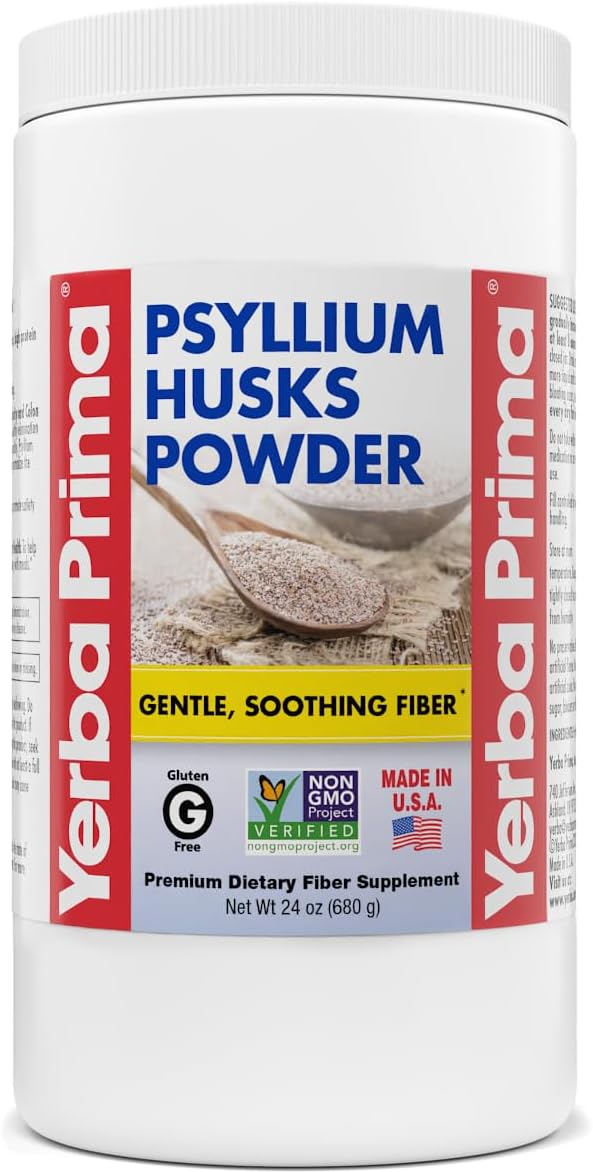
Simple psyllium
A straightforward psyllium option if you prefer a simpler ingredient approach.
View on AmazonFiber supplements (psyllium)
What it does (simple): psyllium is a fiber that absorbs water and supports regularity; it’s also used in cholesterol-friendly routines. MedlinePlus provides general info on psyllium. [6]
Best for: people who struggle to hit fiber consistently from food.
When people take it: with a full glass of water, often before meals.

Aged garlic option
A well-known aged garlic supplement. May help support a heart-friendly routine when paired with food and lifestyle habits.
View on Amazon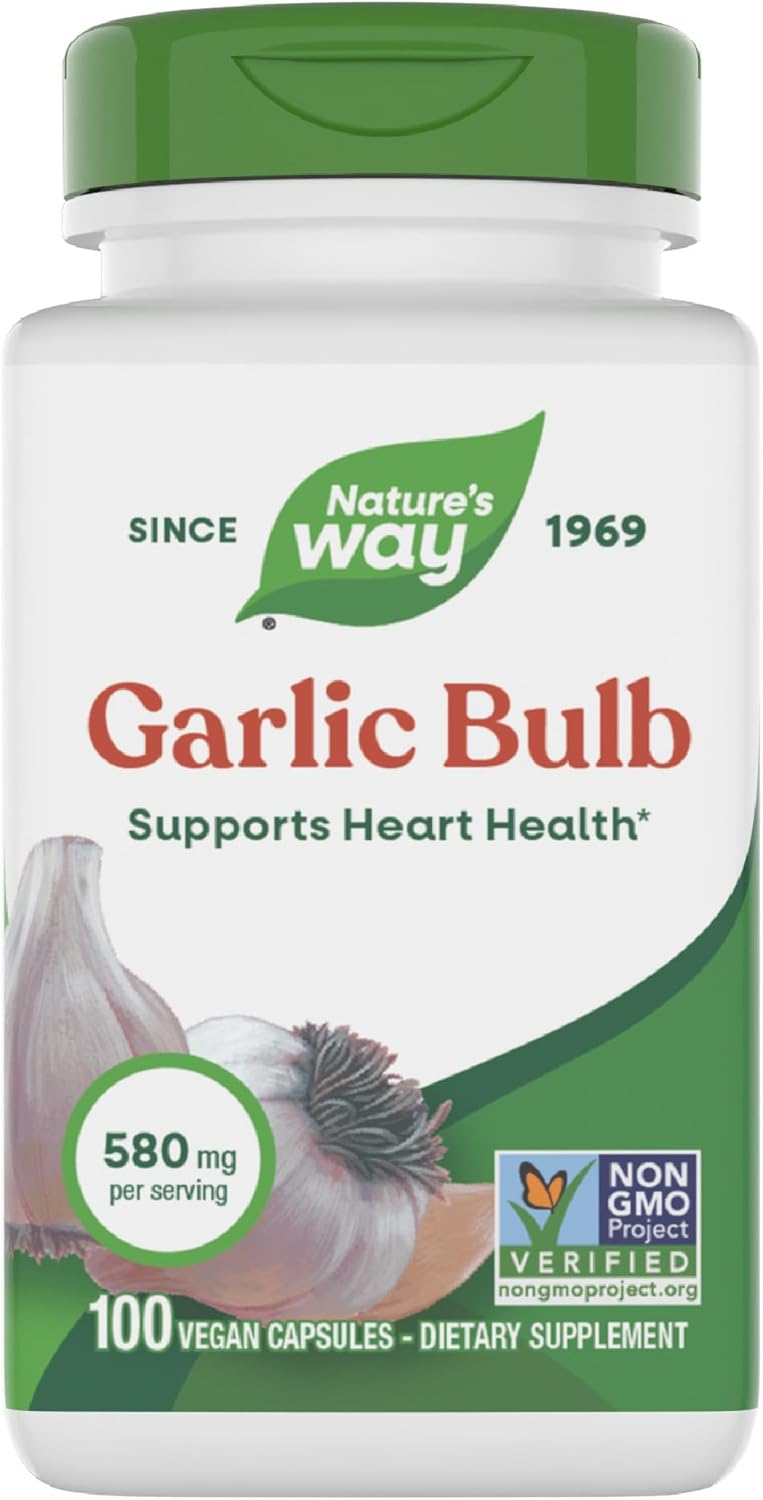
Garlic capsule option
A simple garlic capsule option if you want an easy daily add-on.
View on AmazonGarlic (optional)
What it does (simple): garlic is studied for potential effects on cardiovascular-related markers; evidence varies, and it’s not a replacement for lifestyle habits. NCCIH summarizes garlic research and safety. [7]
Best for: people who don’t eat garlic often and want an optional add-on.
When people take it: with meals.
Safety note: Supplements can interact with medications and may not be appropriate for everyone (especially blood thinners and certain conditions). If you take medications or have a condition, check with a qualified professional first. [3][4][5][7]
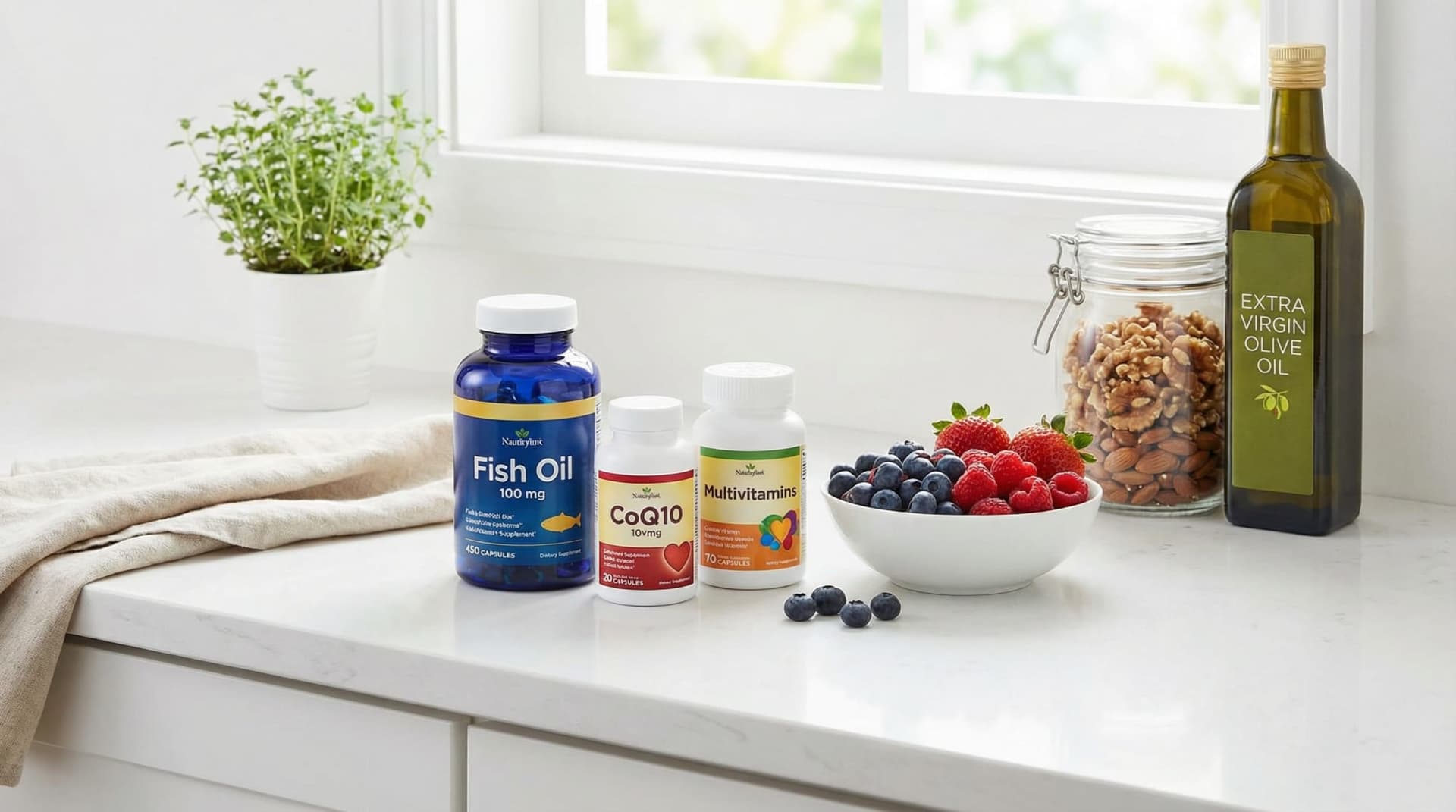
Simple Heart-Healthy Nutrition Routine
This routine is meant to be flexible. You don’t need to do every step. Choose the easiest pieces and repeat them.
Morning
- Start with protein + fiber:
- Greek yogurt + berries + chia
- eggs + fruit
- oats + nuts + berries
- Add a hydration cue:
- water with breakfast, or water before coffee
- Optional supplement routine (if you use them):
- omega-3 with breakfast (common choice) [3]
- CoQ10 with food (if you take it) [5]
Afternoon
- “Fiber add-on” habit:
- fruit + nuts
- beans added to lunch
- a whole-grain side you prepped earlier
- A short walk if possible:
- even 10 minutes after lunch helps build consistency [2]
Evening
- Simple dinner formula:
- protein + vegetables + whole grain + olive oil
- Optional evening routine:
- magnesium as part of a wind-down habit (if appropriate) [4]
- Sleep cue:
- consistent wind-down routine you can repeat most nights
If you’re also working on weight goals, heart-friendly meals often align well with sustainable fat loss:
Common Heart Health Nutrition Mistakes
These mistakes are common because they sound “healthy,” but often backfire.
Over-restricting fats
Not all fats are the same. Many heart-health recommendations emphasize choosing unsaturated fats more often (like olive oil, nuts, seeds) and limiting saturated and trans fats. [1]
Beginner fix:
- keep olive oil and nuts on hand
- add avocado to meals a few times per week
- choose fish sometimes if you enjoy it
Ignoring fiber
Fiber is one of the most repeatable heart health nutrition wins because it’s a food pattern, not a strict rule. [1]
Beginner fix:
- add berries to breakfast
- add beans to lunch
- choose a whole grain you actually like and repeat it
Over-supplementing
More supplements doesn’t mean more results—and it can increase the chance of side effects or interactions. [3][4]
Beginner fix:
- pick one supplement category if you truly need it
- give it time as part of a routine
- keep food and lifestyle as the foundation
Focusing only on diet, not lifestyle
Diet matters, but habits like walking, sleep, stress management, and hydration help your diet stay consistent. CDC guidance highlights lifestyle in heart disease prevention. [2]
Beginner fix:
- pick one habit (10-minute walk, bedtime cue, fiber add-on) and repeat it for two weeks
Simple next step
Choose one heart-healthy habit to repeat this week
Save this article, pick one food (berries or oats) and one habit (a 10-minute walk), and repeat them for 7 days. Then adjust.
FAQ
Frequently Asked Questions
References (source links)
[1] American Heart Association
Diet and Lifestyle Recommendations
[2] CDC
Preventing Heart Disease
[3] NIH Office of Dietary Supplements
Omega-3 Fatty Acids: Consumer Fact Sheet
[4] NIH Office of Dietary Supplements
Magnesium: Consumer Fact Sheet
[5] NCCIH (NIH)
Coenzyme Q10
[6] MedlinePlus (NIH)
Psyllium: Drug Information
[7] NCCIH (NIH)
Garlic: Usefulness and Safety
Content Transparency
This article was created with the assistance of AI technology and has been thoroughly reviewed, fact-checked, and verified by our editorial team of nutrition professionals and registered dietitians. All information is based on current scientific research and medical guidelines. Our editorial process ensures accuracy, relevance, and adherence to evidence-based practices.
Editorial Review
HNH Editorial Team
Nutrition professionals & registered dietitians
Our editorial team consists of nutrition professionals, registered dietitians, and health content specialists who review, fact-check, and verify all content for accuracy and evidence-based information. All articles undergo rigorous editorial review before publication.
High-Protein Breakfasts That Don't Spike Blood Sugar (Beginner Guide)
Simple high-protein breakfast ideas that support steadier energy and fewer crashes—plus meal prep tips and beginner-friendly product picks.
Read article