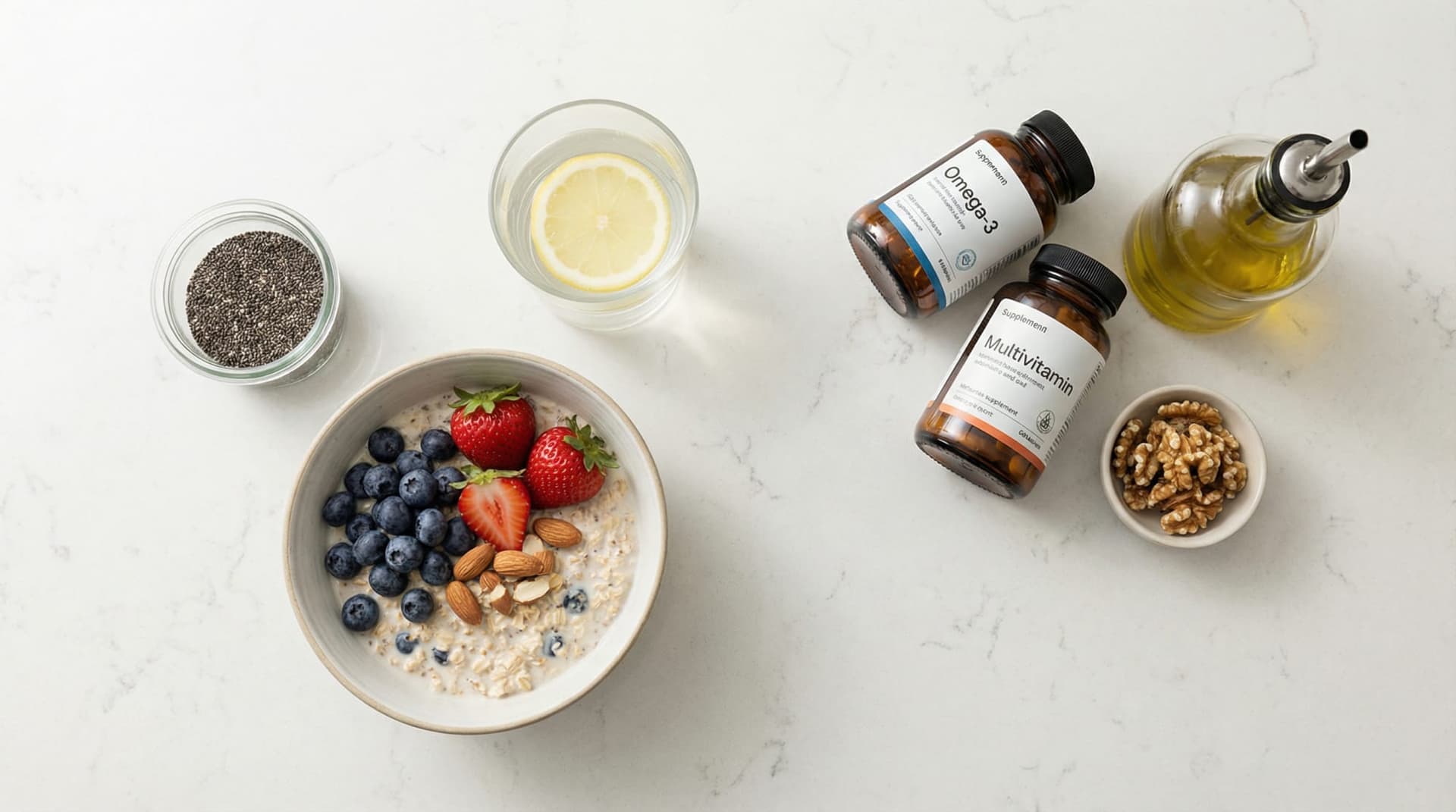
How to Add More Fiber to Your Meals Without the Bloat
A simple, beginner-friendly guide to increasing fiber comfortably—what to eat, how fast to ramp up, and easy meal ideas that won’t leave you feeling puffy.

Editorial Review
HNH Editorial Team
Nutrition professionals & registered dietitians
Our editorial team consists of nutrition professionals, registered dietitians, and health content specialists who review, fact-check, and verify all content for accuracy and evidence-based information. All articles undergo rigorous editorial review before publication.
You know fiber is good for you. You’ve heard it can support digestion, help you feel full longer, and is often associated with better heart and metabolic health. Those benefits aren’t just “wellness vibes”—they show up across research on gut function and cardiometabolic markers. [2][5]
But then you try to “eat more fiber” overnight… and spend the rest of the day feeling like a balloon.
If that’s you, you’re not doing it wrong. Fiber-related bloating is common when you increase too fast. The goal isn’t perfection—it’s a comfortable ramp-up that your gut can adapt to.
This guide shows you how to add more fiber to your meals without the bloat—with practical swaps, meal prep ideas, and beginner-friendly supplements that can help you bridge the gap.
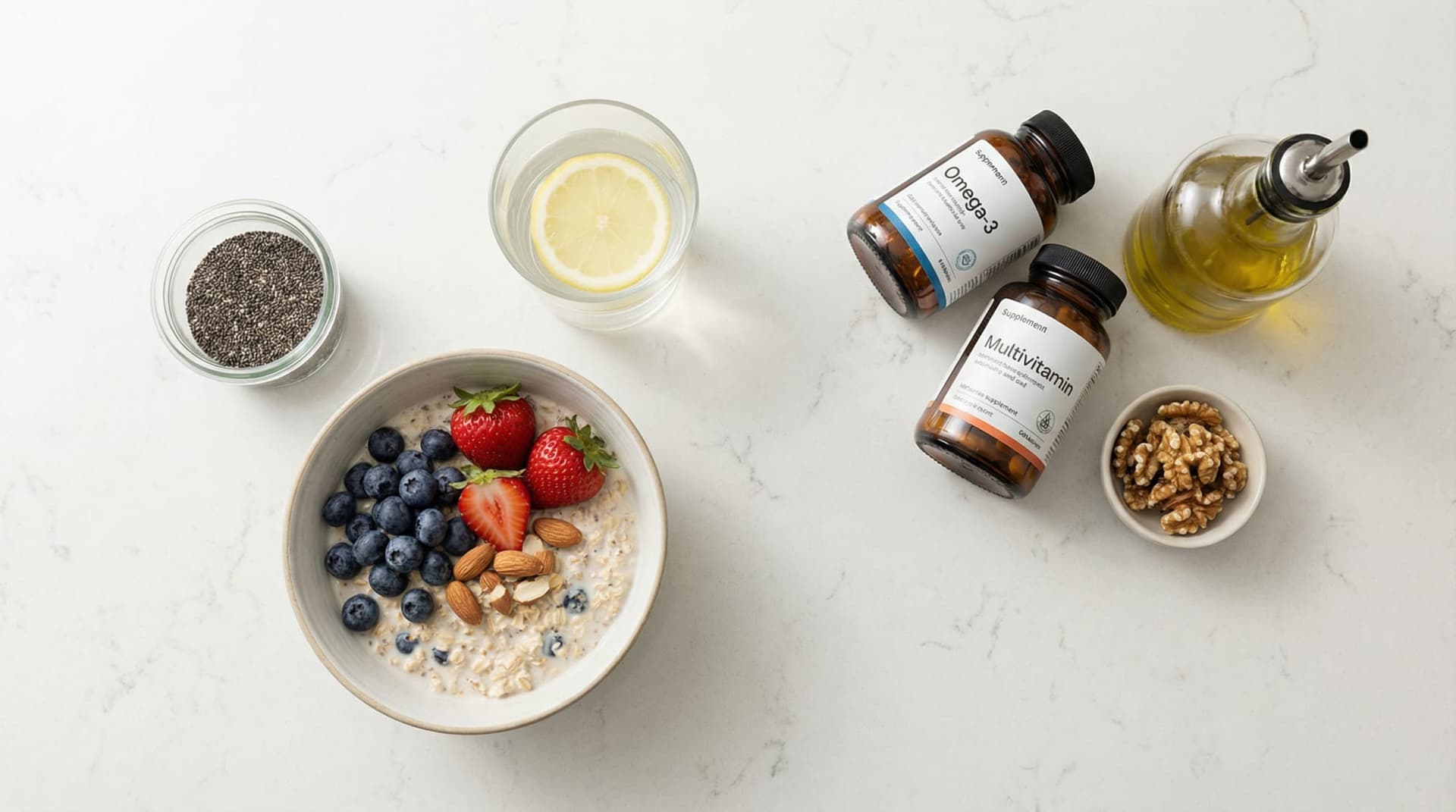
Best starting move
Add 3–5g fiber per week
Biggest comfort tip
Increase water with fiber
Easiest daily win
Fruit + oats + seeds
Friendly reminder: This article is educational and not medical advice. If you have persistent digestive symptoms or a medical condition, speak with a qualified professional.
Why Fiber Sometimes Causes Bloating
Fiber is a type of carbohydrate your body can’t fully digest. When it reaches the large intestine, gut bacteria break some of it down (ferment it)—and fermentation can produce gas.
That doesn’t mean fiber is “bad.” It usually means one (or more) of these happened:
- You increased fiber too quickly
- You didn’t increase fluids alongside fiber
- You jumped straight to more fermentable fibers (like big servings of beans)
- You’re sensitive to certain high-FODMAP foods (common)
In one analysis from the OmniHeart controlled feeding trial, higher-fiber eating patterns were linked with more bloating than baseline—real-world evidence that your gut often needs a transition period, not a sudden jump. [1]
The Golden Rule: Start Slow
If you’re currently getting around 10–15g of fiber per day (common), jumping straight to the recommended range can feel intense. Many expert resources recommend aiming for a gradual increase, and major organizations list fiber targets around 25g/day for women and 38g/day for men (varies by age and needs). [5][6]
A simple approach:
- Increase by ~3–5 grams per week
- Hold steady if symptoms flare
- Build “repeatable” meals instead of changing everything at once
Here’s an easy ramp-up example:
- Week 1: Add 1 piece of fruit at breakfast
- Week 2: Switch to whole-grain bread at lunch
- Week 3: Add a small serving of beans or lentils at dinner
- Week 4: Add chia or ground flax to oats or yogurt
This “slow and steady” approach matches what we see in research patterns: sudden increases can trigger symptoms; gradual transitions tend to be easier to tolerate. [1]
Drink More Water (Seriously)
Fiber works best when it has enough fluid to move through your digestive tract. Some fibers form a gel-like texture when mixed with water, which can support stool softness and regularity.
Practical ways to make this easy:
- Drink a full glass of water with your highest-fiber meal
- Add one extra glass per day during your ramp-up weeks
- Use herbal tea or sparkling water if plain water is hard to remember
A beginner-friendly rule: if you add fiber, add fluids too. (This is also why psyllium products specifically emphasize taking with plenty of water.) [5]
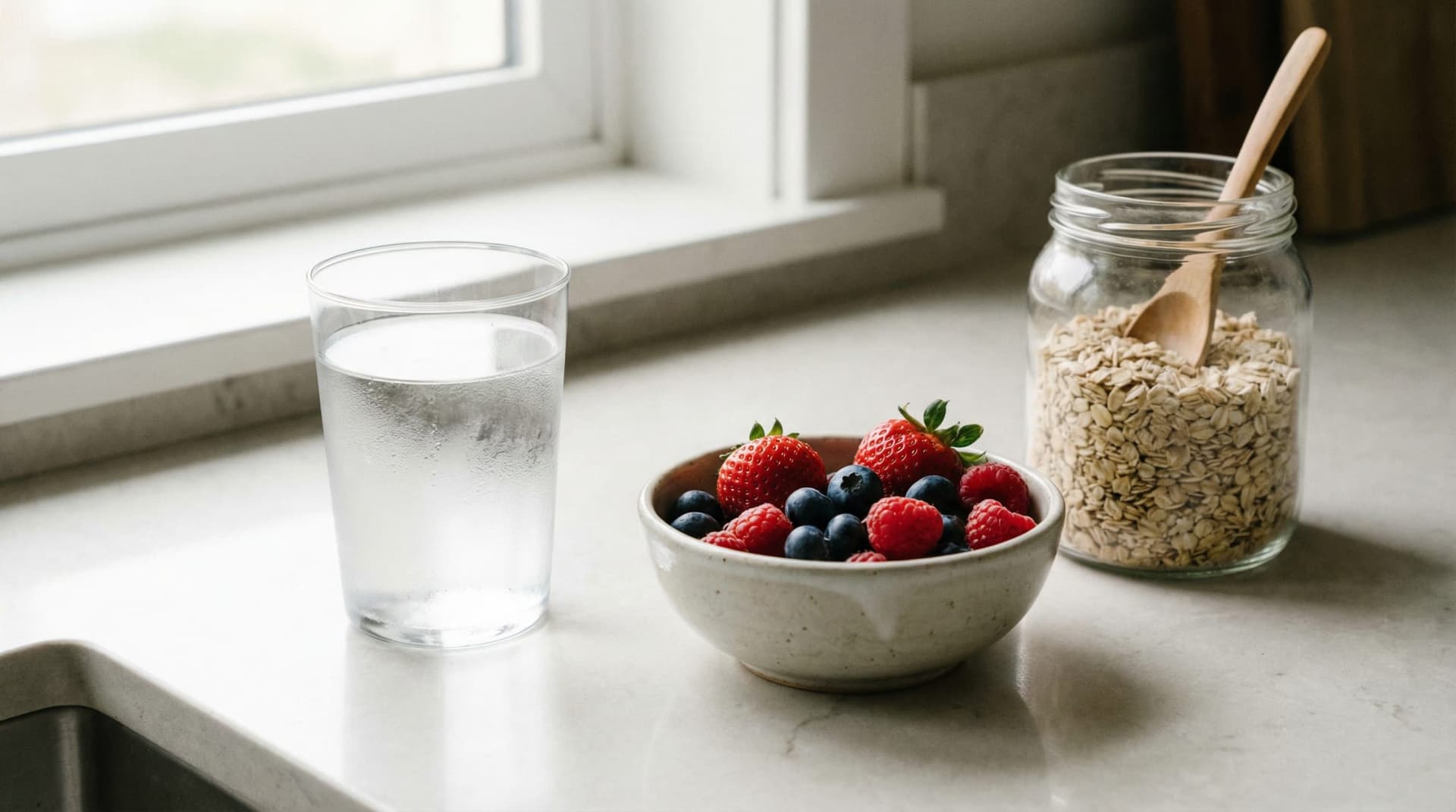
High-Fiber Foods Worth Adding (That Are Often Gentler)
Not all fiber sources feel the same. Some foods are easier to tolerate early on—especially when cooked or portioned thoughtfully.
Below are options organized by category, plus quick “how to use this daily” tips.
Fruits
Fruits often work well for beginners because they contain a mix of fiber + water.
Good options:
- Raspberries (high fiber)
- Pears (leave the skin on)
- Apples (with skin)
- Strawberries
- Kiwifruit (has research support for constipation outcomes) [3]
- Prunes (also supported in constipation-focused research) [4]
Easy daily adds:
- Mix berries into oatmeal or yogurt
- Keep kiwifruit as a “default dessert” a few nights per week
- Add chopped apple + cinnamon to oats
Vegetables
If raw veggies make you feel puffy, cook them first (steamed, roasted, sautéed).
Gentler, fiber-forward picks:
- Broccoli (cooked)
- Brussels sprouts (roasted)
- Spinach or kale
- Artichokes (very high fiber, but start small)

Legumes (Beans, Lentils, Chickpeas)
Legumes are fiber powerhouses—but they’re also a common bloating trigger if you’re not used to them.
Make them easier:
- Start with lentils (often easier than large beans)
- Begin with 2–3 tablespoons, then slowly increase
- Use canned beans and rinse thoroughly
- Consider a digestive enzyme when eating beans (more below) [7]
Whole Grains
Beginner-friendly whole grains:
- Oats
- Barley
- Quinoa
- Whole-wheat pasta (or do half regular / half whole wheat at first)
Seeds
Seeds are “small but mighty” and easy to add without changing your whole meal.
- Chia seeds
- Ground flaxseed
- Pumpkin seeds
Start with 1 teaspoon, then work up.
Simple Fiber Swaps for Each Meal
Small substitutions are often easier than a big diet overhaul.
Breakfast swaps
- Add berries to yogurt or oatmeal
- Try overnight oats with chia
- Choose whole-grain toast instead of white
Related reading: If mornings feel rough on your stomach, you may like our guide on /blog/morning-gut-routine-to-reduce-bloating.
Lunch swaps
- Whole-grain bread for sandwiches
- Add chickpeas to salads (start small)
- Snack on carrots + hummus
Dinner swaps
- Swap white rice for quinoa or barley
- Add one extra cooked vegetable
- Add lentils to soups/stews
Snack swaps
- Fruit + nut butter
- A small handful of nuts/seeds
- Whole-grain crackers + cheese
- Kiwi or prunes as an evening “fiber helper” option [3][4]
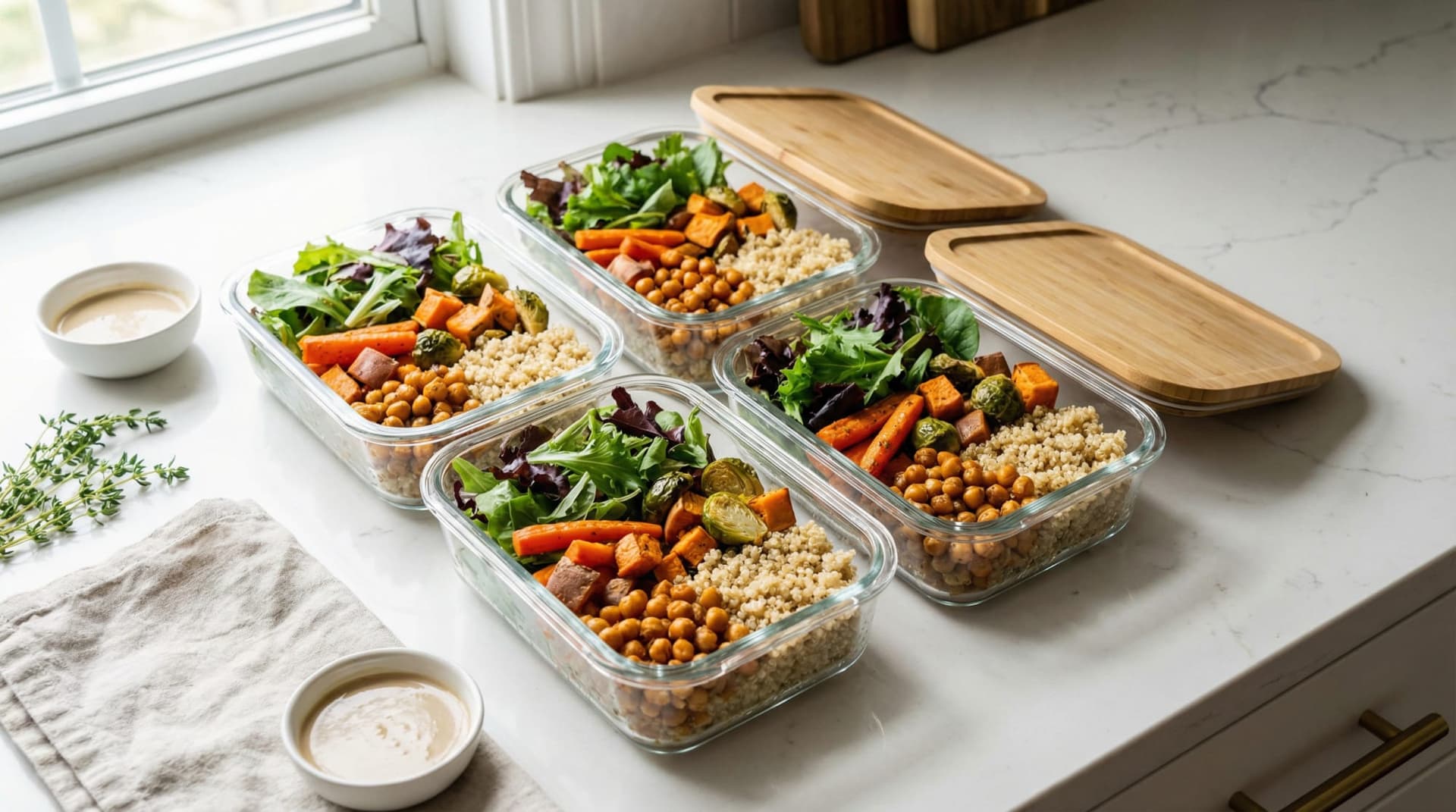
High-Fiber Meal Prep Tips (That Make It Automatic)
Meal prep is one of the easiest ways to get consistent fiber without thinking about it daily.
Try one (not all) of these:
- Batch-cook grains: quinoa, barley, or brown rice for 3–4 days
- Prep legumes: cook lentils or keep rinsed canned beans ready
- Wash + chop veggies: so they’re friction-free
- Overnight oats: oats + chia + milk, then add fruit in the morning
Research note (simple): In a randomized trial using higher cereal fiber patterns, higher fiber intake was associated with improved insulin sensitivity in overweight adults—one reason fiber-forward breakfasts (like oats) show up so often in nutrition guidance. [2]
Optional: Fiber-Friendly Supplements & Tools (Amazon Picks)
Supplements aren’t a replacement for food, but they can help you bridge the gap while you build better routines—especially if you’re trying to increase fiber slowly.
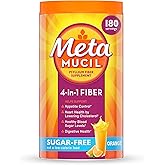
Best starter fiber (mix-in powder)
A classic psyllium option that can help you gradually increase soluble fiber. Start with a small serving and drink plenty of water.
View on Amazon
Capsule option (no mixing)
Helpful if you dislike powders. Still best taken with a full glass of water and introduced slowly.
View on Amazon
Easy breakfast fiber
A simple way to add cereal fiber at breakfast. Works well as porridge or mixed into overnight oats.
View on Amazon
Gentle add-on (smoothies & oats)
An easy way to add fiber to smoothies, oats, and yogurt. Start with 1 teaspoon and increase slowly.
View on Amazon
Helps with beans (comfort tool)
A popular option some people use with the first bite of gas-producing foods (like beans). Not a cure—just a convenience tool for comfort.
View on AmazonSupplement note: Start low, go slow, and follow label directions—especially for psyllium, which should be taken with plenty of water. If you take medications, ask a professional about timing since fiber can affect absorption for some people.
Quick Reference: Putting It All Together
If you want a simple plan, use this checklist:
- Increase fiber gradually (3–5g/week is a practical pace) [1]
- Add water as you add fiber [5]
- Prefer cooked veggies early on
- Start legumes in small portions
- Keep 2–3 “default” fiber breakfasts (oats, yogurt + berries, whole-grain toast)
- Use kiwifruit or prunes when you want a food-first regularity helper [3][4]
One Small Step to Start Tomorrow
If you’re unsure where to begin, do this:
Add one high-fiber fruit to breakfast tomorrow.
That’s it.
When that feels comfortable, make your next small swap the following week. Consistency beats intensity.
Get the next guide
Want more gut-friendly routines like this?
Subscribe to get simple, science-backed nutrition habits you can actually stick with—no extreme rules.
FAQ
Frequently Asked Questions
References (source links)
[1] Clinical and Translational Gastroenterology (OmniHeart)
Effects of High-Fiber Diets and Macronutrient Substitution on Bloating
[2] The American Journal of Clinical Nutrition (MARCH trial)
Cereal fiber and protein patterns in isoenergetic diets and insulin sensitivity
[3] Systematic review & meta-analysis
Kiwifruit and kiwifruit extracts for constipation outcomes
[4] Systematic review & meta-analysis (PubMed)
Effect of fruit intake on functional constipation (RCTs and crossover studies)
[5] Mayo Clinic
Dietary fiber: recommended amounts and practical guidance
[6] NIH News in Health
Rough Up Your Diet (fiber targets and common intake gaps)
[7] Verywell Health
What to know about Beano and how to take it safely
Content Transparency
This article was created with the assistance of AI technology and has been thoroughly reviewed, fact-checked, and verified by our editorial team of nutrition professionals and registered dietitians. All information is based on current scientific research and medical guidelines. Our editorial process ensures accuracy, relevance, and adherence to evidence-based practices.
Editorial Review
HNH Editorial Team
Nutrition professionals & registered dietitians
Our editorial team consists of nutrition professionals, registered dietitians, and health content specialists who review, fact-check, and verify all content for accuracy and evidence-based information. All articles undergo rigorous editorial review before publication.
High-Protein Breakfasts That Don't Spike Blood Sugar (Beginner Guide)
Simple high-protein breakfast ideas that support steadier energy and fewer crashes—plus meal prep tips and beginner-friendly product picks.
Read article