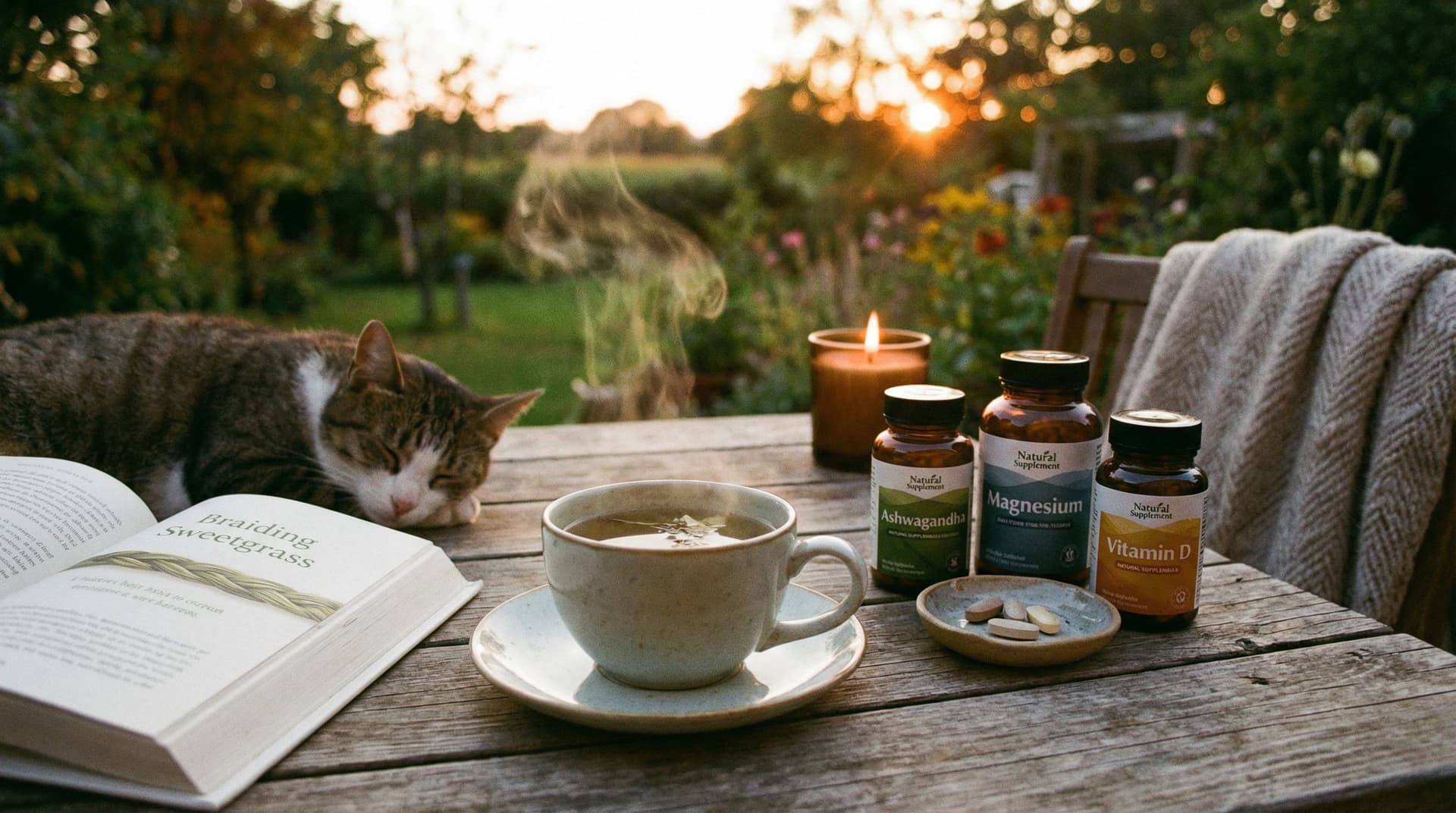
Natural Supplements for Stress Relief
A simple guide to stress-support supplements—what they do, who they’re best for, and how to build a calmer routine without overdoing it.

Editorial Review
HNH Editorial Team
Nutrition professionals & registered dietitians
Our editorial team consists of nutrition professionals, registered dietitians, and health content specialists who review, fact-check, and verify all content for accuracy and evidence-based information. All articles undergo rigorous editorial review before publication.
Supplements won’t remove stress from your life—but some may help support a calmer baseline when paired with sleep, nutrition, and simple routines. The key is to start with one option, use it consistently, and track how you feel. [1][2]
Best for
Busy mind, tension, wind-down routines
Start with
One supplement + one habit
Timing
Day calm vs night wind-down
Friendly reminder: This article is educational and not medical advice. If
you’re pregnant/nursing, have a medical condition, or take medications,
consult a qualified professional.
How to pick a stress supplement (without stacking 6 things)
Start with:
- one main goal (daytime calm, nighttime wind-down, or stress resilience)
- one supplement for 2–3 weeks
- one simple habit (walk, breathing, bedtime consistency)
Related reading: Magnesium Glycinate Benefits
6 natural supplements people use for stress support
1) Magnesium glycinate (night routine)
NIH ODS notes magnesium supports muscle and nerve function and is required for energy production. [3]
2) L-theanine (calm focus)
Often used for calm focus during the day.
3) Ashwagandha (stress resilience)
NCCIH notes ashwagandha may be safe short-term (up to 3 months) but includes important cautions, including avoiding use during pregnancy and rare liver injury reports. [1]

4) Rhodiola (stress-related fatigue)
NCCIH notes rhodiola is possibly safe short-term (up to 12 weeks) and lists possible side effects like insomnia and dizziness. [2]
5) Lemon balm (gentle wind-down)
Often used as tea or capsules for evening routines.
6) Chamomile tea (simple habit)
A routine-builder that pairs well with an earlier bedtime.
Product picks
Best for nighttime wind-down
Commonly used in evening routines to support relaxation and muscle comfort. Start low and stay consistent.
View on AmazonDaytime calm focus
Often used for calm focus during the day. A good pick if stress feels like a busy mind.
View on AmazonPopular resilience option
Common daily option for stress support. Review safety cautions and avoid during pregnancy. [1]
View on AmazonTea-based wind-down
A gentle nightly routine cue. Pair with lower lights and a consistent bedtime.
View on Amazon
Beginner mistakes to avoid
- starting 3 supplements at once
- taking rhodiola late in the day if it affects sleep [2]
- assuming “natural” means risk-free
- ignoring pregnancy and medication cautions [1][2][3]
Simple stress routine (7 days)
Daytime reset
- • 10-minute walk
- • 2-minute slow breathing
- • Protein-forward lunch
Night wind-down
- • Dim lights 30 minutes before bed
- • Tea or magnesium routine
- • Same bedtime most nights
Calm plan
Choose one supplement + one habit this week
Keep it simple: consistency is what makes routines work.
FAQ
Frequently Asked Questions
References
Content Transparency
This article was created with the assistance of AI technology and has been thoroughly reviewed, fact-checked, and verified by our editorial team of nutrition professionals and registered dietitians. All information is based on current scientific research and medical guidelines. Our editorial process ensures accuracy, relevance, and adherence to evidence-based practices.
Editorial Review
HNH Editorial Team
Nutrition professionals & registered dietitians
Our editorial team consists of nutrition professionals, registered dietitians, and health content specialists who review, fact-check, and verify all content for accuracy and evidence-based information. All articles undergo rigorous editorial review before publication.
High-Protein Breakfasts That Don't Spike Blood Sugar (Beginner Guide)
Simple high-protein breakfast ideas that support steadier energy and fewer crashes—plus meal prep tips and beginner-friendly product picks.
Read article